

- Michel Forst
- September 22, 2025
A Personal Reflection on a Historic Moment
As I write this, having witnessed firsthand the escalating threats facing environmental defenders across Europe and beyond, I find myself deeply moved by the Inter-American Court of Human Rights’ Advisory Opinion AO-32/25 on “Climate Emergency and Human Rights,” delivered on July 3, 2025. This landmark decision represents not just legal progress, but a beacon of hope for the countless environmental defenders I work to protect in my role as the first UN Special Rapporteur specifically mandated to safeguard those exercising their rights under the Aarhus Convention.
The parallels between what I observe in my European mandate and what the Inter-American Court has now addressed are striking and deeply troubling. In my position paper released in February 2024, I documented how environmental activists who use peaceful civil disobedience are currently facing repression across Europe that constitutes “a major threat to democracy and human rights.” Now, the I/A Court HR has provided a comprehensive framework that addresses these very concerns from a climate and human rights perspective.
This extensive analysis examines the protection standards for environmental defenders established in AO-32/25, explores areas where our regional systems can learn from each other, and identifies concrete opportunities for coordination between the Aarhus Convention mechanisms and Inter-American standards. Having spent more than 10 years responding to urgent cases of environmental defender persecution, I see this Advisory Opinion as a crucial step toward the coordinated international response our global environmental crisis demands.
The Urgency We Face: A Global Perspective
From my work across the 47 Parties to the Aarhus Convention, I have seen how environmental defenders face systematic repression that spans at least four dimensions: media and political discourse, legislation and policy, law enforcement, and the courts. Yet the situation in Latin America and the Caribbean, as addressed by the I/A Court HR, presents an even more alarming picture.
Latin America and the Caribbean consistently accounts for the highest number of documented murders of environmental defenders globally, making up 85 percent of global cases in 2023, with three environmental defenders killed per week on average. This stark reality underscores why the I/A Court HR’s intervention through AO-32/25 is so critical – it applies to all Member States of the Organization of American States, more than 30 countries that can no longer ignore what the Court calls the States’ “special duty of protection” toward environmental defenders.
In my European context, while we fortunately don’t see the same levels of lethal violence, the criminalization and systematic harassment I document share troubling similarities with patterns across the Americas. The environmental emergency that we are collectively facing cannot be addressed if those raising the alarm and demanding action are criminalized, harassed, or killed for it.
Learning from the I/A Court HR: Core Protection Standards
The Special Duty of Protection: A Framework I Recognize
The I/A Court HR’s establishment of a “special duty of protection” resonates deeply with my experience implementing the Aarhus Convention’s Article 3(8), which requires that persons exercising their rights under the Convention “shall not be penalized, persecuted or harassed in any way for their involvement.” The Court’s message is unmistakable: environmental defenders have the right to impartial, timely, and thorough justice.
What strikes me as particularly significant is how the I/A Court HR has expanded this protection to encompass not only physical safety but also the growing use of legal harassment against defenders. The Court addressed the growing use of Strategic Lawsuits Against Public Participation (SLAPP suits) to suppress environmental advocacy, urging states to repeal laws abused to persecute defenders, establish procedures to rapidly dismiss baseless legal actions, and train law enforcement and judicial authorities to prevent judicial harassment.
This comprehensive approach mirrors what I’ve been advocating for in my mandate. In my rapid response work, I’ve seen how SLAPP suits and criminalization of peaceful environmental protest create a chilling effect that extends far beyond individual cases. The I/A Court HR’s recognition of this pattern validates the concerns I’ve raised about the systematic nature of environmental defender persecution.
Enhanced Due Diligence: Beyond Paper Commitments
From my perspective as someone who regularly assesses state responses to environmental defender persecution, the I/A Court HR’s emphasis on enhanced due diligence is crucial. States, to fulfil their duty to guarantee rights in the context of climate emergency, must exercise enhanced due diligence. The Court recognizes that the mere existence of laws or public policies is insufficient – states must ensure effective implementation and enforcement.
This mirrors my experience in the Aarhus system, where I’ve learned that protection measures must be tailored to each situation and may require multiple actions to ensure environmental defenders are not subject to further persecution, penalization, and harassment. The I/A Court HR’s standard requiring states to go beyond policy formulation to ensure practical protection aligns with the proactive approach I take in my mandate.
The Escazú Agreement: A Model for Regional Coordination
One of the most encouraging aspects of AO-32/25 is its consistent reference to the Escazú Agreement. As it has done in previous decisions, the Court consistently referred to the standards of the Escazú Agreement in this climate opinion. This creates what I see as a powerful precedent for how regional human rights mechanisms can strengthen environmental defender protection.
The Escazú Agreement holds a special place in my work because it represents the first legally binding instrument to include specific provisions for the protection and promotion of human rights defenders in environmental matters. Under Article 9, member states must guarantee a safe and enabling environment for environmental defenders – exactly the kind of comprehensive protection framework I advocate for in my European context.
What’s particularly significant is how the I/A Court HR’s references create both legal and political effects. Legally, the Court is incorporating Escazú protections into Inter-American standards applicable to all OAS member states, not just the 18 countries that have ratified the Agreement. Politically, this demonstrates that regional environmental agreements can effectively complement and strengthen human rights protection systems.
Bridging Our Systems: Lessons from the Aarhus Experience
The Rapid Response Mechanism in Practice
Since my election as Special Rapporteur in June 2022, I’ve developed a rapid response system that offers several lessons for strengthening global environmental defender protection. The Special Rapporteur’s role is to take measures to protect any person experiencing or at imminent threat of penalization, persecution, or harassment for seeking to exercise their rights under the Aarhus Convention.
What makes our mechanism unique is its accessibility and speed. Any member of the public, Party to the Aarhus Convention, or the secretariat can submit a complaint to me. Recognizing that time is of the essence when it comes to environmental defender safety, complainants may file complaints even if domestic remedies haven’t been exhausted, and may maintain confidentiality when providing information.
This flexibility could inform strengthening of protection mechanisms in the Americas. While the I/A Court HR provides comprehensive interpretive guidance on state obligations, there’s room for complementary rapid response mechanisms that can provide immediate assistance to defenders facing imminent threats.
Expanding the Definition of Environmental Defenders
Through my work, I’ve seen how the Aarhus Convention Compliance Committee has taken a broad approach to defining ‘environmental defenders.’ This includes persons who engage in demonstrations or rallies connected to environmental issues, even without immediate links to specific Aarhus rights. In some cases, direct actions and acts of civil disobedience may fall under Article 3(8) protection.
This broad approach resonates with the I/A Court HR’s recognition that environmental defenders encompass individuals, communities, and organizations working on climate issues. The Court’s emphasis on protecting Indigenous peoples, Afro-descendant communities, and rural populations reflects an understanding that environmental defense takes many forms and deserves comprehensive protection.
Areas for Enhanced Coordination
1. Shared Challenges, Complementary Solutions
Both our systems face the challenge of environmental defender criminalization. In my February 2024 position paper, I documented how this trend spans media discourse, legislation, law enforcement, and courts. The I/A Court HR’s comprehensive framework for addressing these same patterns creates opportunities for shared learning and coordinated responses.
Our systems offer complementary strengths: the Aarhus mechanism provides rapid response capabilities for immediate threats, while the Inter-American system offers comprehensive interpretive guidance on state obligations. Together, we can create more robust protection networks.
2. Cross-Regional Information Sharing
Regular exchanges between our mechanisms could enhance effectiveness for all environmental defenders. This should include sharing jurisprudence, emerging threat patterns, successful protection measures, and innovative approaches to prevention.
I’ve seen how information sharing within the European context has helped identify systemic patterns of repression. Expanding this to include Inter-American experiences could provide crucial insights for both regions.
3. Joint Advocacy and Awareness-Raising
The I/A Court HR’s recognition of the right to a healthy climate as a human right deriving from the right to a healthy environment provides a powerful framework for joint advocacy. This right strengthens the legal foundation for environmental defender protection across all regions.
The Business Dimension: A Shared Concern
The Advisory Opinion’s attention to business responsibilities particularly resonates with my work. Businesses must also refrain from practices that limit the right to participation, especially about the protection of human rights and environmental defenders. This provision creates obligations for companies to respect environmental defender work and refrain from intimidation.
In my European mandate, I regularly encounter cases where corporate interests intersect with environmental defender persecution. The I/A Court HR’s clear statement on business obligations provides a framework that could strengthen protection efforts globally.
The Right to a Healthy Climate: A Game-Changer
The I/A Court HR’s recognition of the right to a healthy climate represents a paradigm shift that strengthens environmental defender protection worldwide. This autonomous right provides clearer legal foundations for the advocacy work I see defenders pursuing across all regions.
This development builds on the Aarhus Convention’s pioneering recognition of rights for both present and future generations to an environment adequate to their health and well-being. The convergence of these approaches creates powerful precedents for enhanced protection globally.
Looking Forward: Concrete Steps for Coordination
1. Establish Formal Cooperation Protocols
Our regional systems should develop formal cooperation mechanisms including regular information exchanges, joint training programs, and coordinated responses to serious persecution cases. This could build on existing cooperation but create more systematic coordination.
2. Develop Emergency Response Networks
Building on the Aarhus rapid response model, we could create emergency networks providing immediate assistance to environmental defenders facing imminent threats. These should include diplomatic channels, legal support, and temporary relocation assistance when necessary.
3. Address Transnational Aspects
Environmental issues and threats to defenders often cross borders, requiring coordinated responses. Our regional systems should develop mechanisms for addressing transnational environmental crimes and protecting defenders working on cross-border issues.
4. Strengthen Civil Society Engagement
Both systems have benefited from strong civil society involvement. Continued engagement of environmental defender organizations in monitoring, reporting, and advocacy is essential for effective implementation.
The Path Forward: From Standards to Protection
As I reflect on the I/A Court HR’s groundbreaking Advisory Opinion, I see both tremendous progress and significant challenges ahead. The legal frameworks now exist for comprehensive environmental defender protection, but implementation remains the critical test.
The environmental emergency we collectively face cannot be addressed if those raising the alarm are criminalized for it. The only legitimate response to peaceful environmental activism at this point is for authorities, media, and the public to realize how essential it is to listen to what environmental defenders have to say.
Through my mandate, I will continue working to ensure that environmental defenders across the Aarhus region can exercise their rights without fear. The I/A Court HR’s Advisory Opinion provides a powerful complement to these efforts, and I look forward to exploring concrete coordination opportunities that can enhance protection for environmental defenders globally.
The climate crisis demands urgent action, and environmental defenders are on the front lines of this struggle. Their protection is not just a matter of human rights – it is essential for our planet’s survival. The standards established in AO-32/25, combined with the mechanisms we’ve developed under the Aarhus Convention, provide the foundation for a more protective future.
Our collective responsibility now is to ensure these standards translate into real protection for those courageously defending our planet’s future. The legal frameworks exist – the question is whether we have the political will to implement them effectively and create a world where environmental defenders can continue their vital work safely and without fear.
Conclusion: A Call for Solidarity
The I/A Court HR’s Advisory Opinion AO-32/25 represents a watershed moment that demands our collective response. As someone who has dedicated my mandate to protecting environmental defenders, I see this decision as validation of our shared understanding that those defending our planet deserve comprehensive protection.
The parallels between the challenges I address in Europe and those facing defenders in the Americas underscore the global nature of this crisis. Through enhanced coordination between our regional systems, shared learning, and strengthened implementation mechanisms, we can create more effective protection for environmental defenders worldwide.
The path forward requires solidarity between regions, cooperation between mechanisms, and unwavering commitment to those who risk their safety to protect our planet. The I/A Court HR has shown us what’s possible when human rights law meets the climate emergency. Now it’s time for all of us to ensure these standards become living protection for environmental defenders everywhere.
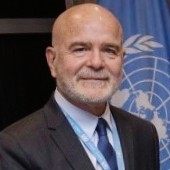
Michel Forst
Michel Forst, UN Special Rapporteur on Environmental Defenders under the Aarhus Convention
SIMPOSIO OC 32
LISTADO DE ARTÍCULOS