
PROCESS


How was Advisory Opinion No. 32 on Climate Emergency and Human Rights developed?
A wide range of actors—including communities, youth, civil society organizations, academia, experts, and international bodies—joined forces to shape Advisory Opinion No. 32, requested by Chile and Colombia and driven by the Inter-American Court of Human Rights. States from across the region, local governments, and even Vanuatu—which promoted a similar initiative before the International Court of Justice—also took part. This historic precedent is the result of the most wide-reaching and participatory process in the history of the Inter-American Court. Here’s how it unfolded:
2022
An agreement between countries to promote an inter-American response to the climate emergency
Through collaborative work and dialogue with the governments of Chile and Colombia—committed to both human rights and climate action—a concrete proposal took shape: to request an Advisory Opinion from the Inter-American Court. CEJIL provided technical assistance to both States in the development of this joint request.

2023
Submission of the request
In January, Chile and Colombia formally submitted their request before the Inter-American Court of Human Rights. The request posed a series of key questions aimed at addressing the climate emergency from a human rights perspective, integrating scientific, legal, and environmental approaches. The six main points of the request were:
- The duty of States to prevent, mitigate, and remedy damage caused by climate change, especially from short-lived climate pollutants such as methane.
- The right of individuals and communities to access environmental information and justice.
- Special protection for children and adolescents, as well as safeguarding the rights of future generations against the impacts of the crisis.
- The guarantee of adequate consultation processes and meaningful participation of affected communities, along with their access to justice.
- The defense of the environment and territory, particularly by Indigenous peoples, women, Afro-descendant communities, and human rights defenders.
- The principle of common but differentiated responsibilities among States, considering their capacities and levels of contribution to climate change, including in the context of forced displacement.
2023
The Inter-American Court accepts the request from Chile and Colombia
In March, the Court accepted the request and invited States and organizations to submit contributions as amici curiae, based on the questions posed by Chile and Colombia.

2023
The process matters as much as the outcome
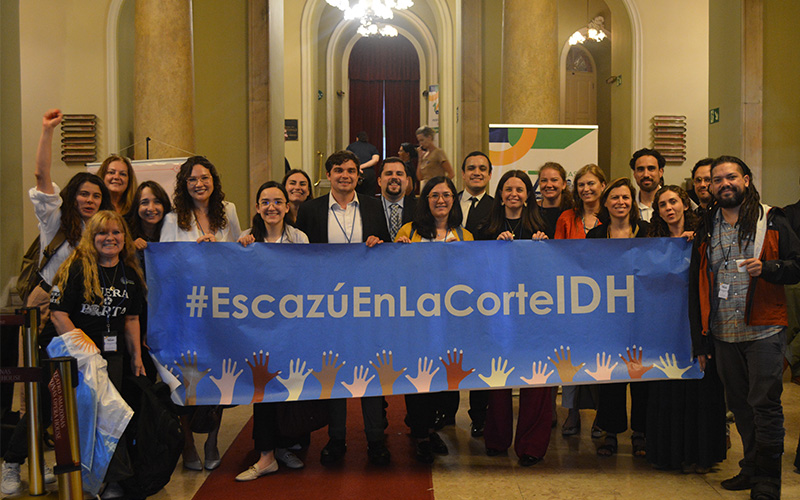
The process initiated by the Court created opportunities and spaces to build and strengthen alliances, strategies, and participation mechanisms that included States, local governments, social and academic organizations, scientists, activists, human rights defenders, and affected communities from across the region.
As a result, Advisory Opinion No. 32 reached record levels of participation. According to the Court, more than 260 written submissions were received from States, international bodies, civil society, academia, activists, and even the private sector.
During this stage, CEJIL worked to expand access to information and spaces for dialogue, promoting the participation of a broad and diverse range of stakeholders. For example, in partnership with Guardianes por la Vida, UN Colombia, and the School Network, we conducted a consultation on children and climate, in which 1,225 children from eight departments of Colombia shared their voices and concerns. Similarly, we convened five interdisciplinary working groups with a wide range of organizations and experts to jointly develop technical inputs to enrich the Advisory Opinion.
As a result, we submitted five amicus curiae briefs to the Court on:
The emerging State obligations in consultation and judicial processes given the climate emergency.
2024
Public hearings
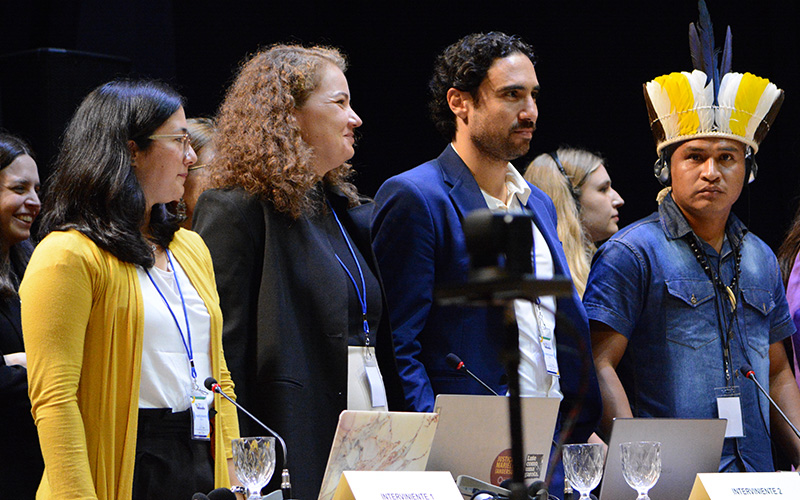
Between April and May, the Inter-American Court convened States, organizations, communities, and other participants in three public hearings, which set a historic record with more than 150 oral presentations. These hearings took place in:
Bridgetown, Barbados (April 2024)
Brasília and Manaus, Brazil (May 2024)
CEJIL was able to participate in both hearings through five oral interventions linked to our written submissions.
Together with allied organizations, we also organized events and activities to exchange and strengthen common legal arguments and coordinate strategies to reinforce both the process and the outcome. In addition, we jointly launched a regional communications effort to share the importance and impact of the Advisory Opinion through podcasts, articles, forums, infographics, and educational materials aimed at decision-makers as well as vulnerable communities.
2025
Publication of the Advisory Opinion
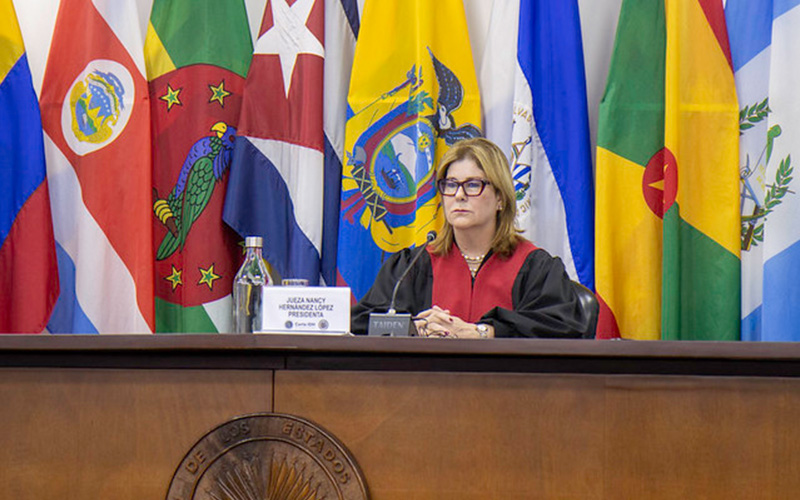
On July 3, the Inter-American Court issued Advisory Opinion No. 32 on Climate Emergency and Human Rights, establishing a legal roadmap for the Americas.
2025 onward
Implementation and follow-up
The Advisory Opinion sets out a clear roadmap, grounded in States’ international obligations, for responding to the climate emergency from a human rights perspective. Making this a reality depends on States actively integrating these standards into their laws, policies, and practices. Achieving this requirescoordinated efforts among public institutions, justice systems, ombuds offices, civil society, academia, and affected communities.
At CEJIL, we reaffirm our commitment to actively contribute to these efforts, ensuring that the Advisory Opinion is widely known, discussed, applied, and implemented. We invite you to explore this page to learn more about the documents and initiatives we are driving forward.